Artificial intelligence
I use AI to build, not just to generate.
I use AI to build systems that eliminate manual work, connect information, improve decisions, and give small teams more leverage.
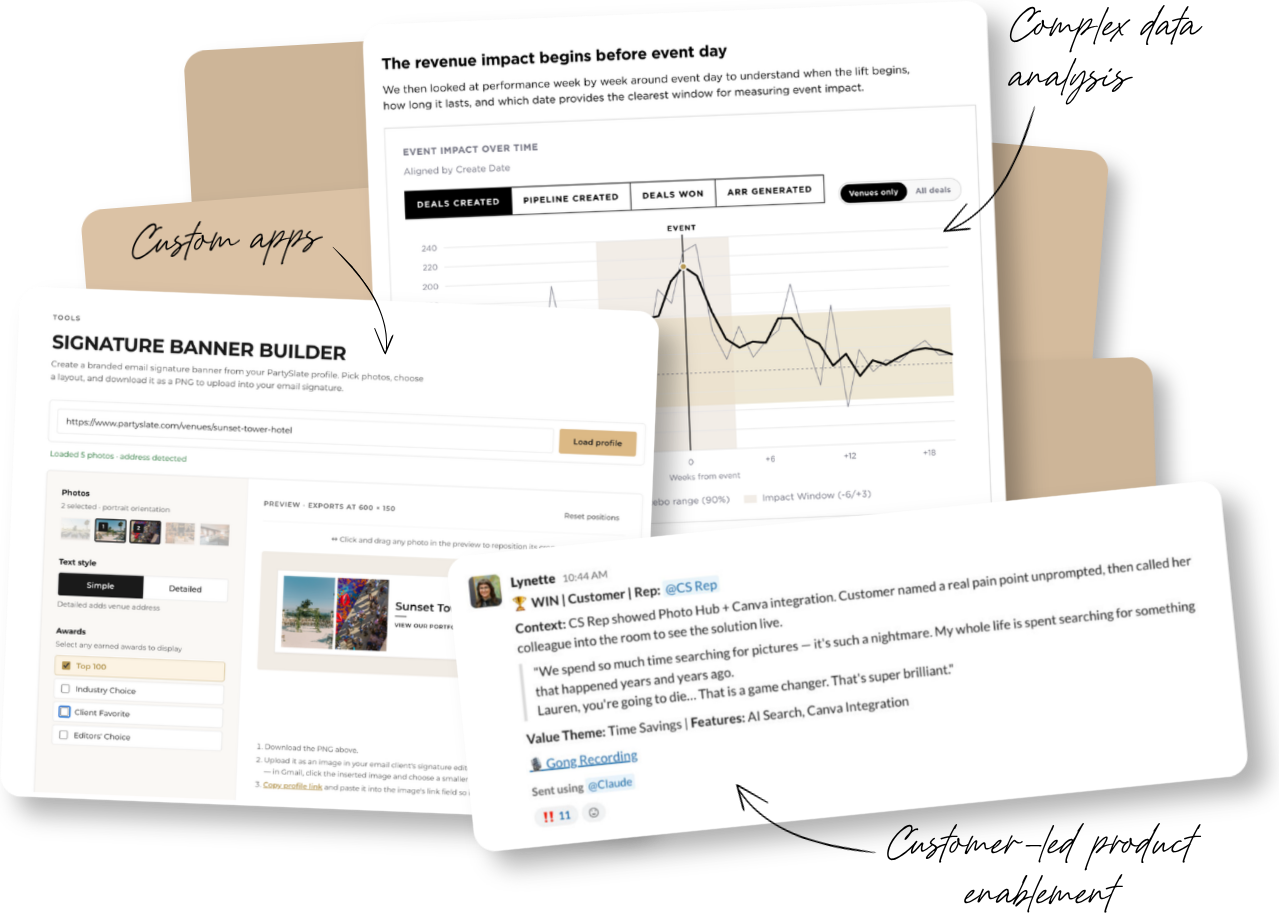
Customer intelligence
I use AI to connect customer conversations, CRM, product usage, billing and engagement data, surfacing patterns that would otherwise require significant manual review. Then I build those insights into the workflows where teams can actually use them.
Customer-led product enablement
Shifted product enablement from periodic, top-down training to continuous learning from real customer conversations.
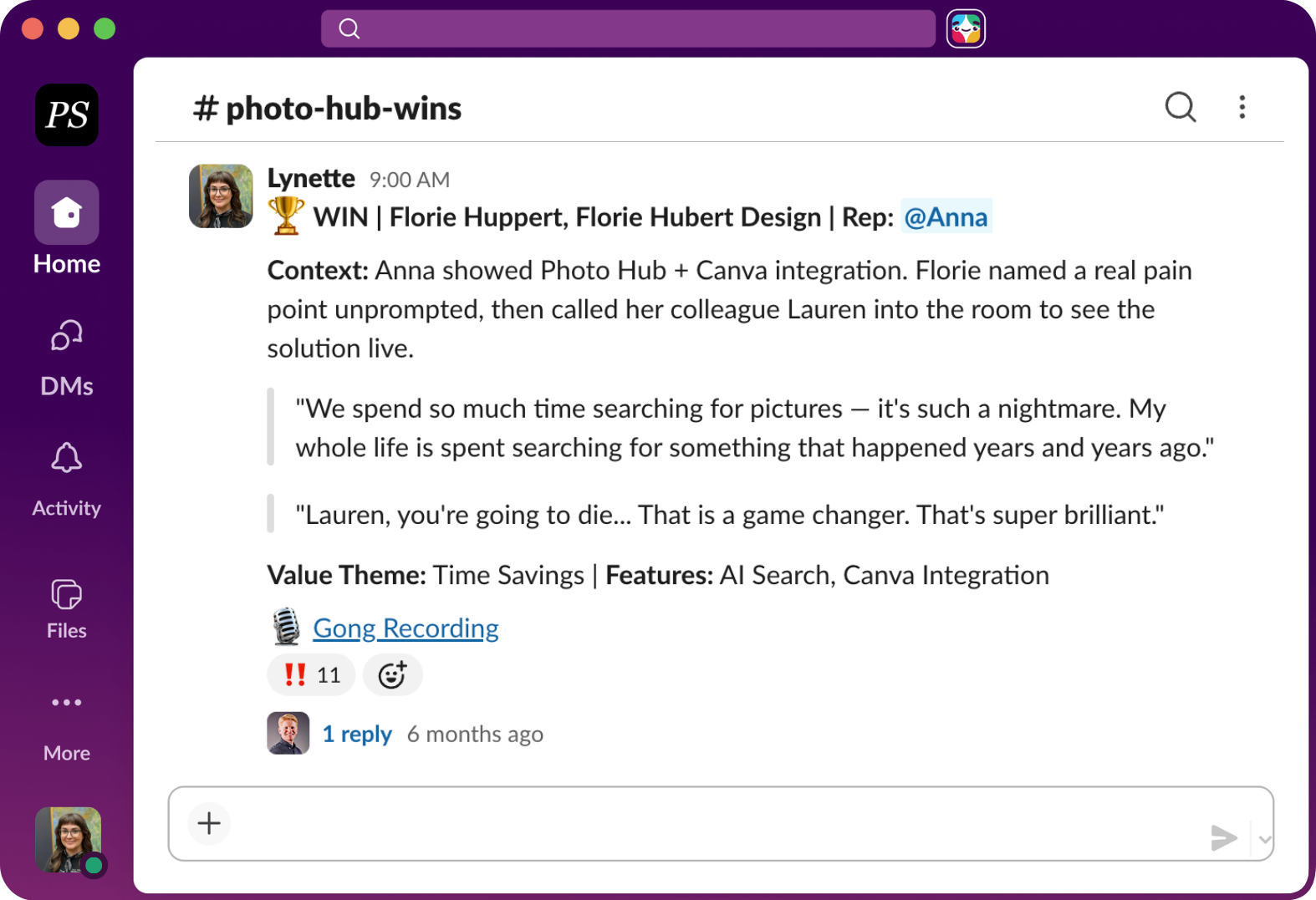
I built an AI system that reviews 100+ Sales, CS, and onboarding conversations each week and identifies the small percentage that demonstrate strong product conversations, real customer use cases, or effective ways of communicating value. Each week, 3–5 moments are surfaced in Slack, creating a feedback loop: strong behaviors get recognized and reinforced, while the rest of the team gets real examples they can apply in their own calls.
Automated customer meeting intelligence
Reduced meeting prep to under 5 minutes while enabling more proactive customer conversations, contributing to a ~20% reduction in monthly churn.
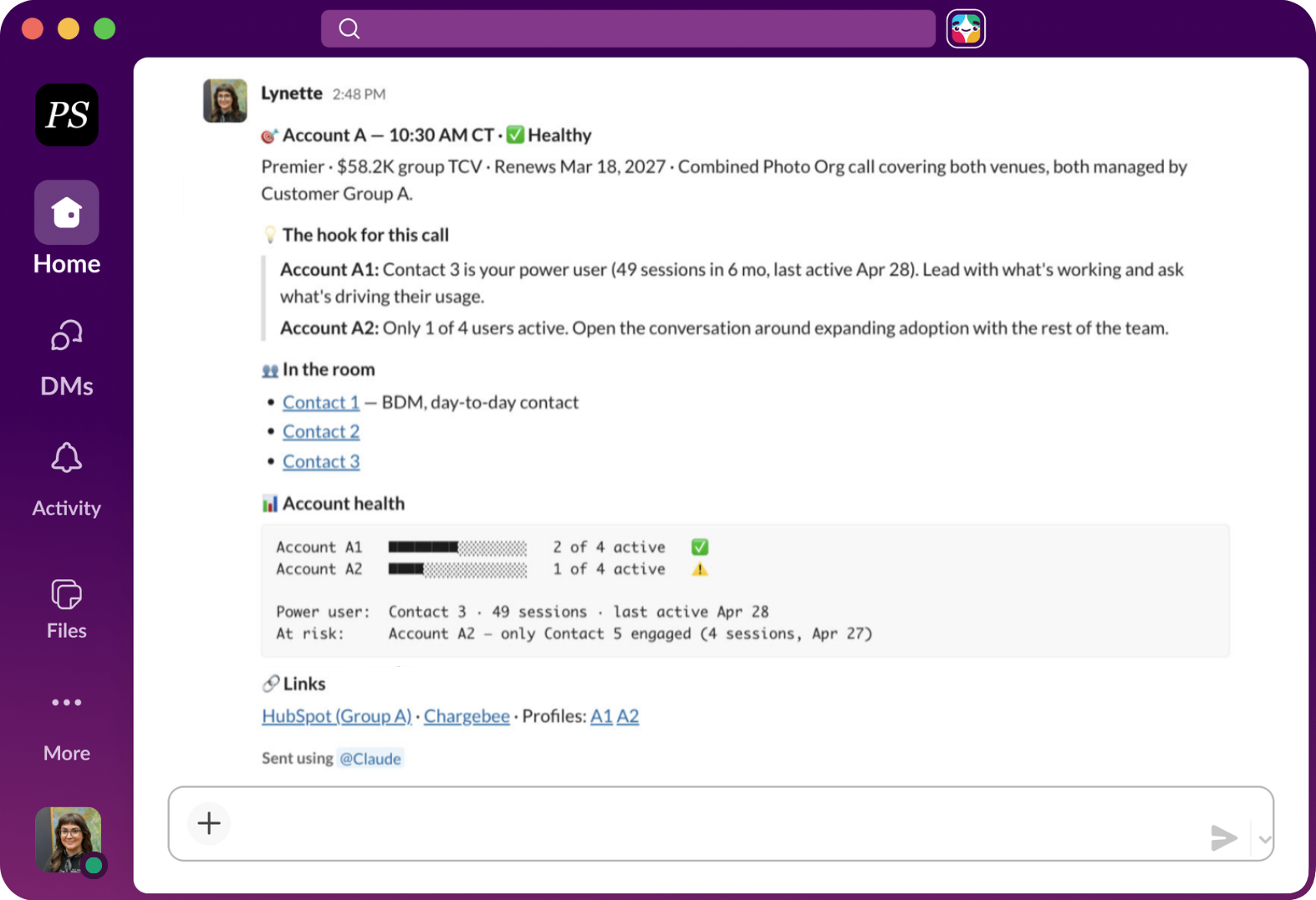
I built an AI workflow that connects CRM, billing, product analytics, and engagement data to identify usage patterns, activation gaps, billing issues, expansion opportunities, and churn risk. Concise briefs are automatically delivered in Slack each morning based on the day’s scheduled customer meetings.
Workflow automation
I use AI to redesign workflows, not just make individual tasks faster. I look for repeated coordination, context gathering and manual decisions, then build systems that let the work move with less intervention while keeping human judgment where it matters.
Automated daily prioritization
Turned meetings, Slack, email, and active initiatives into an automatically maintained, prioritized to-do system.
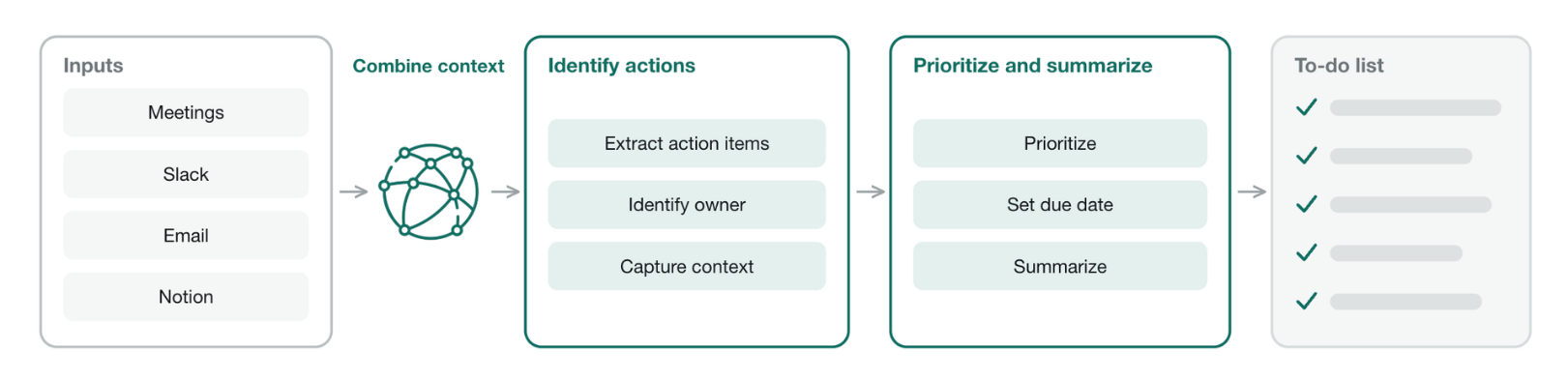
My work is distributed across meetings, Slack, email, and active initiatives. I built an AI workflow that brings those sources together and determines what actually requires action. It identifies commitments and requests, determines ownership, checks whether work has already been completed, prevents duplicate tasks, connects work to active initiatives, and assigns priority and due dates based on the underlying context.
AI-powered case study production
Reduced case study production from ~2 weeks with agency support to ~1 hour in-house with AI.
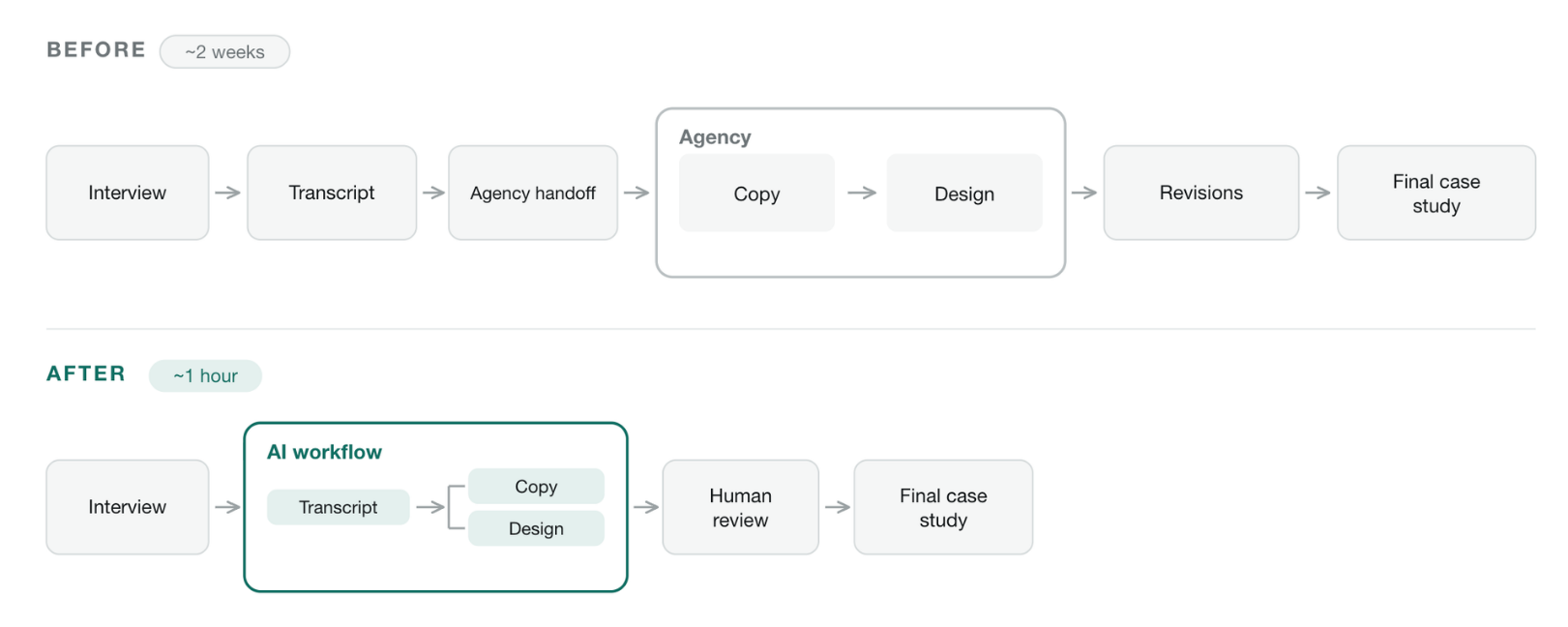
Producing a customer case study previously required coordination across our internal team, outside agency, copy, design, customer assets, and multiple rounds of handoffs. I rebuilt the workflow around AI, turning a customer interview transcript into a structured story, on-brand copy, and designed case study ready for human review.
Analysis & decision-making
I use AI to analyze complex data, test assumptions and find patterns that change how we understand performance. The goal isn’t to summarize dashboards. It’s to determine what’s actually driving business outcomes.
Measuring the incremental impact of events
Rebuilt event measurement around incremental revenue impact, helping increase estimated return from ~1x historically to 3.4x in 2026 YTD.
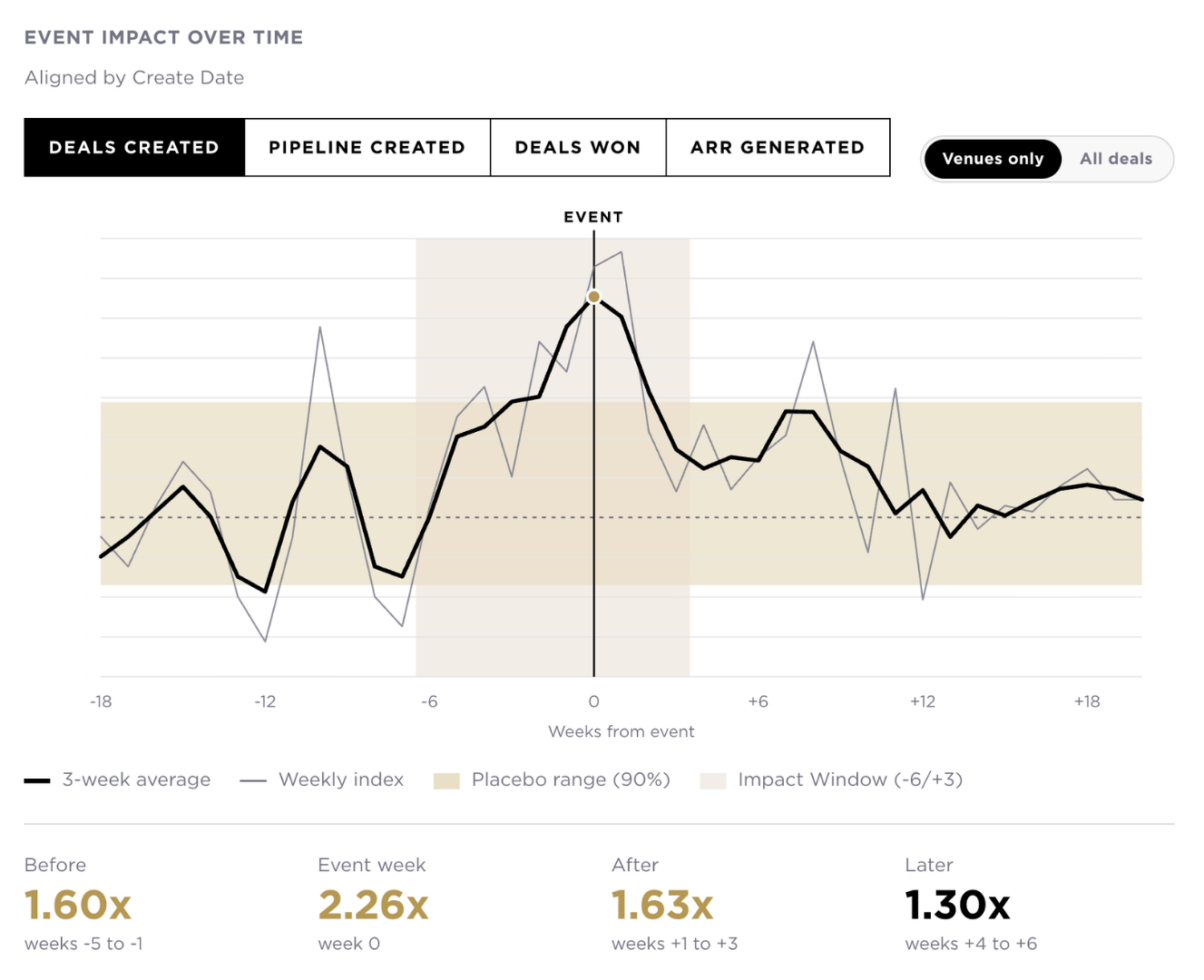
I used AI to analyze patterns across CRM deal data, opportunity timing, event engagement, geography, and historical market performance to understand when and how events actually drive revenue. The analysis revealed that the biggest impact happens through new opportunity creation beginning before event day, leading us to replace broad, attendee-based attribution with a standardized nine-week measurement window based on when opportunities are created. By layering event performance against each market’s historical baseline, I could estimate incremental revenue rather than simply count revenue that may have happened anyway. That gave us a more accurate way to measure ROI and revealed where to improve it: start the Sales motion earlier, use RSVP and attendance as buying signals, expand targeting to high-value prospects beyond the traditional metro list, and prioritize the markets and audiences producing the strongest incremental return.
Building & prototyping
I use AI to turn ideas into working experiences instead of stopping at briefs, wireframes or requirements. I build functional prototypes, internal tools and reusable systems so teams can test ideas and iterate faster.
AI-assisted landing page prototyping
Turned a proposed landing page redesign into a working experience before Engineering invested development time.
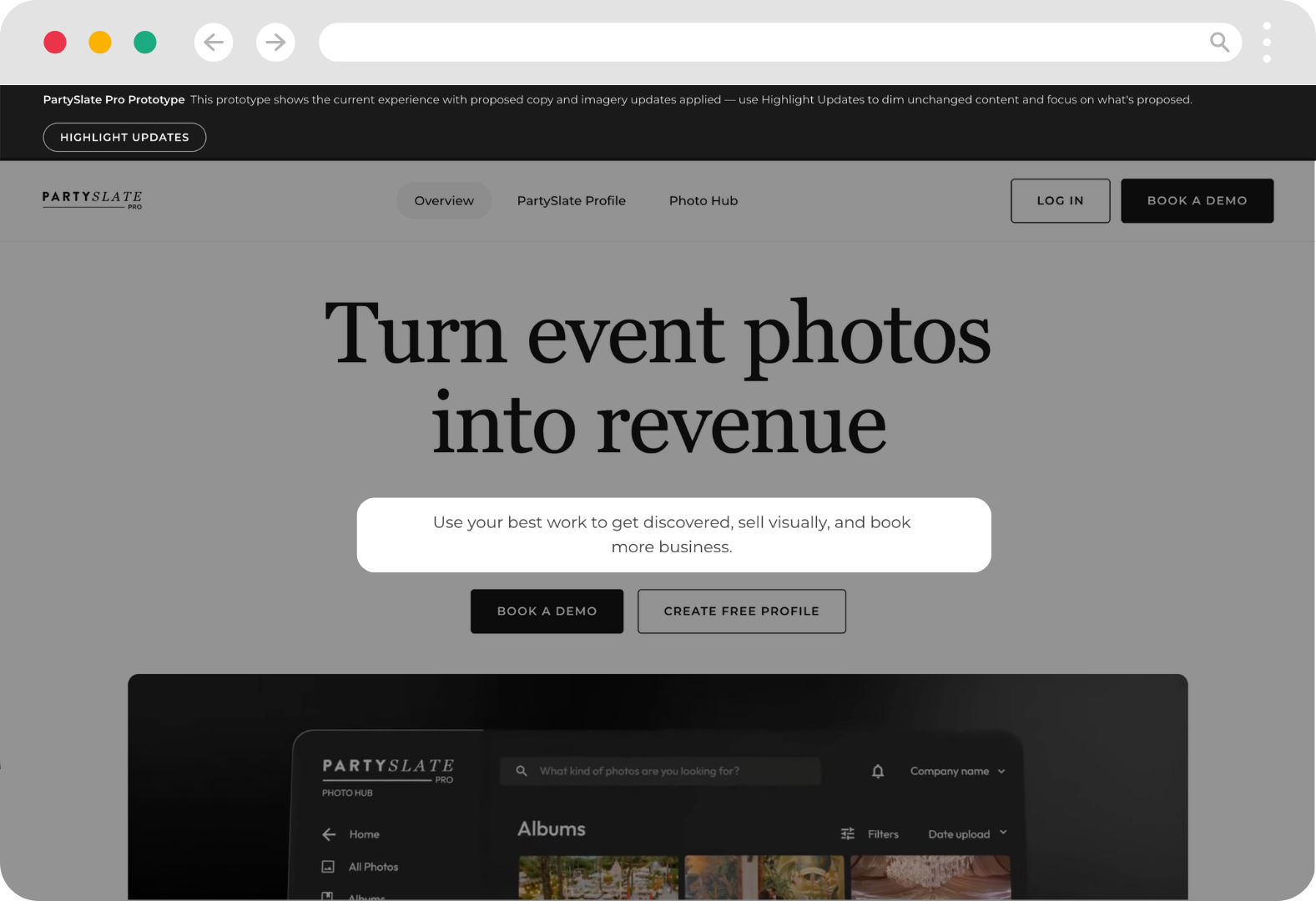
Rather than documenting the changes I wanted Engineering to make, I used Claude Code to build the proposed experience myself. The working prototype made the intended messaging, hierarchy, layout, interactions, and responsive behavior tangible, giving Engineering something to interact with instead of interpreting a brief.
See the working prototypeAI design system
Built a shared design system so AI-assisted development can scale without sacrificing brand consistency.
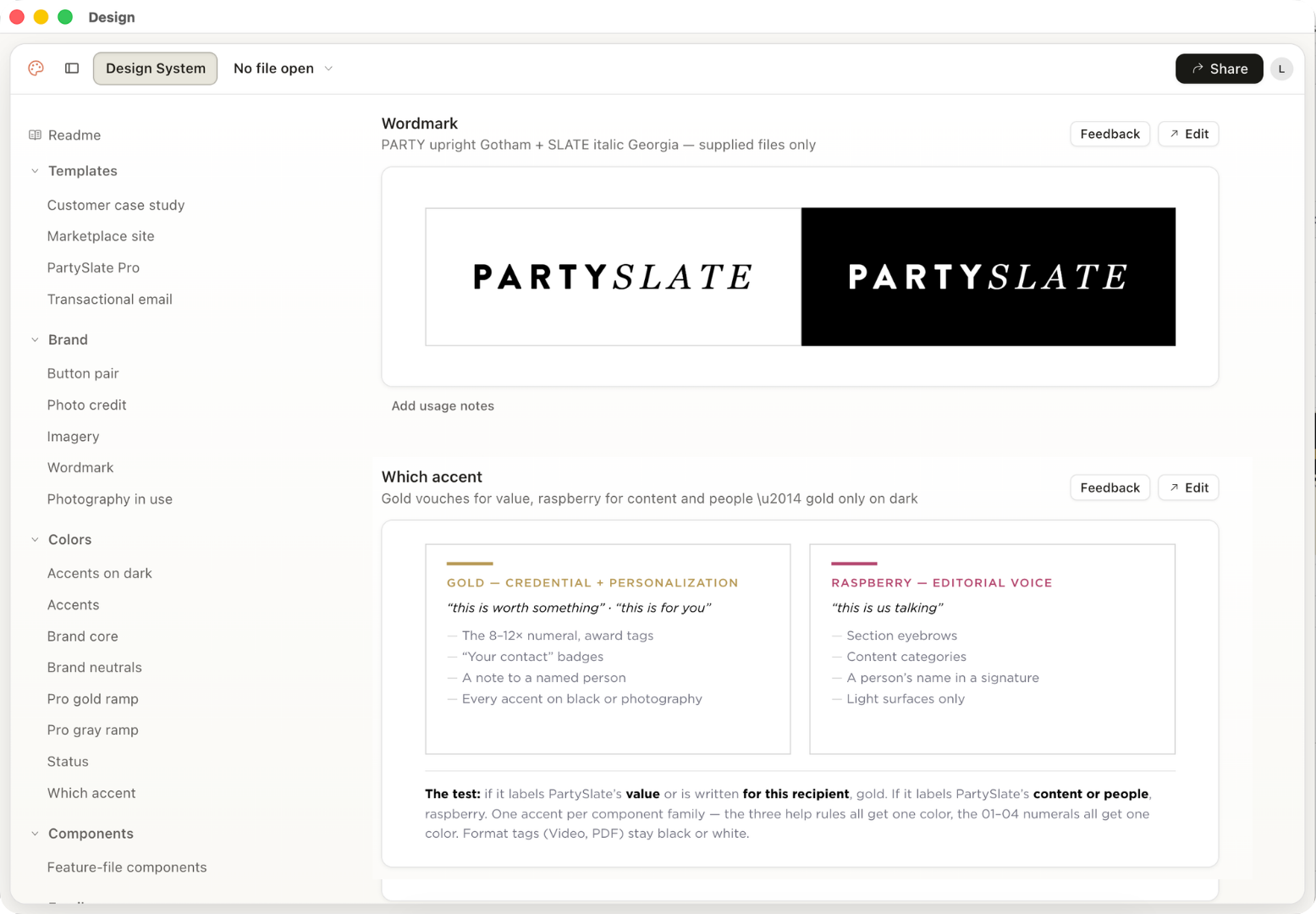
As more people began using AI to build internal tools and experiences, I saw a new problem: faster development could also mean increasingly inconsistent design. I translated our brand and UX standards into a reusable system for AI-assisted development, covering typography, color, imagery, components, interaction patterns, and common templates. That creates a shared foundation people can build from independently while producing experiences that still feel like they came from the same company.
Tools I'm using
- Claude
- Claude Code
- ChatGPT
- Replit
- HubSpot
- Mixpanel
- Gong
- Notion
- Zapier